Industry
Ed-tech / AI / Enterprise
Client
Grammarly
Blue Sky Ideation with Grammarly Research Assistant
Overview
"Really impressed with the quality, thoughtfulness, and speed of explorations for the Grammarly Research project. Tarica did an amazing job diving deep into student workflows and came up with innovative and inspiring prototypes.”
— Yura Tanskyi, Grammarly Design Lead
My Role
How might we design a research system that helps students move seamlessly between reading and writing—while making it easier to capture, organize, and apply information throughout the essay process?
The Problem
For students working on long-form essays, research is not a single step — it happens continuously throughout the writing process. Students move between reading, extracting key ideas, organizing notes, and incorporating sources into their work. The result is a workflow spread across tabs, documents, and tools that don't talk to each other. A significant portion of a student's effort goes toward logistics like tracking sources, copying citations, and relocating material they've already read, rather than the actual thinking the assignment requires. Grammarly’s research showed that high-performing students were especially motivated to reduce this overhead. They weren’t looking for shortcuts, but for tools that would help them stay organized, save time, and maintain clarity as their work evolved. The challenge wasn't helping students read or write in isolation. It was supporting the entire research lifecycle in a way that felt cohesive and unobtrusive.
Key Constraints
Approach
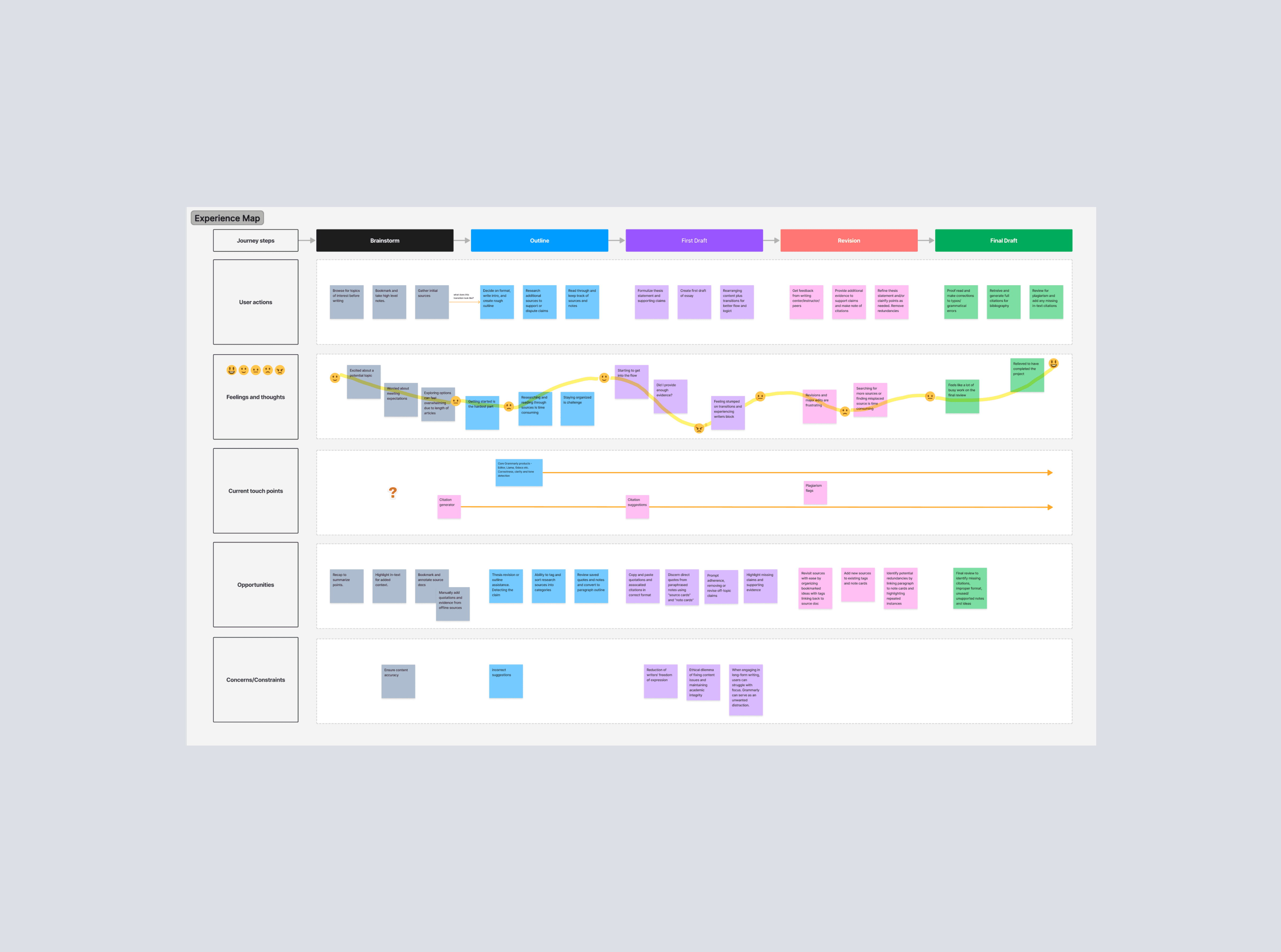
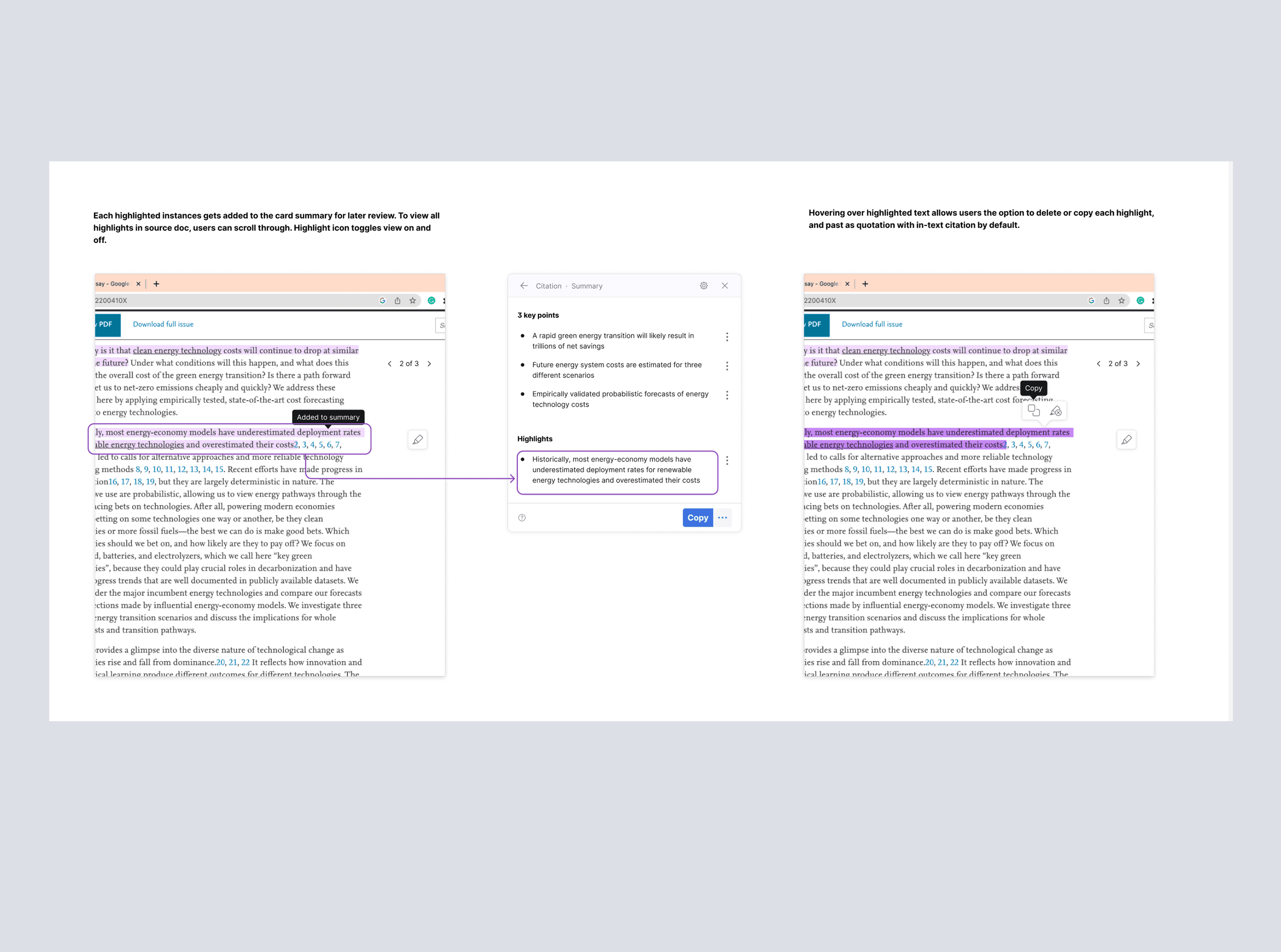
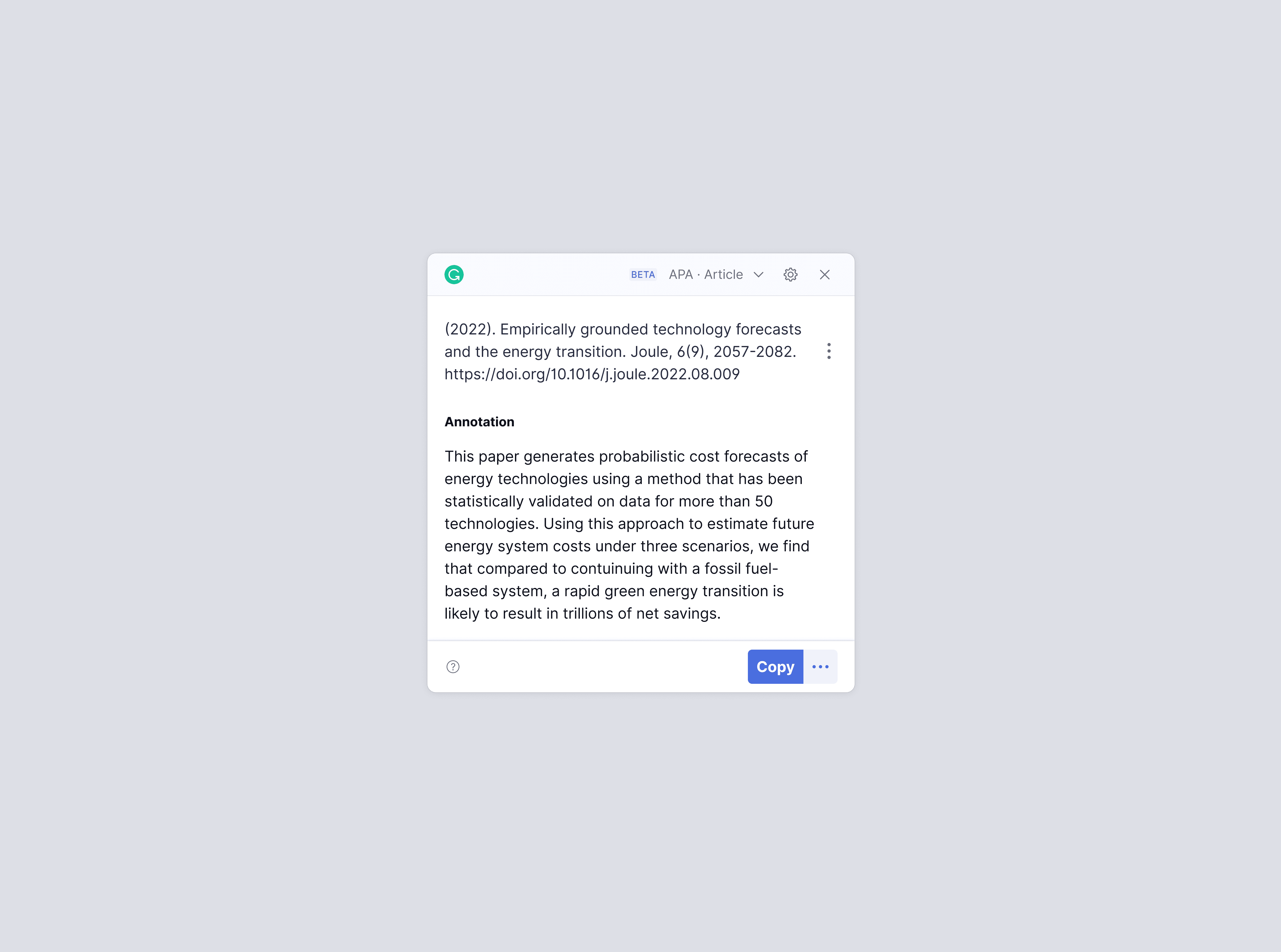
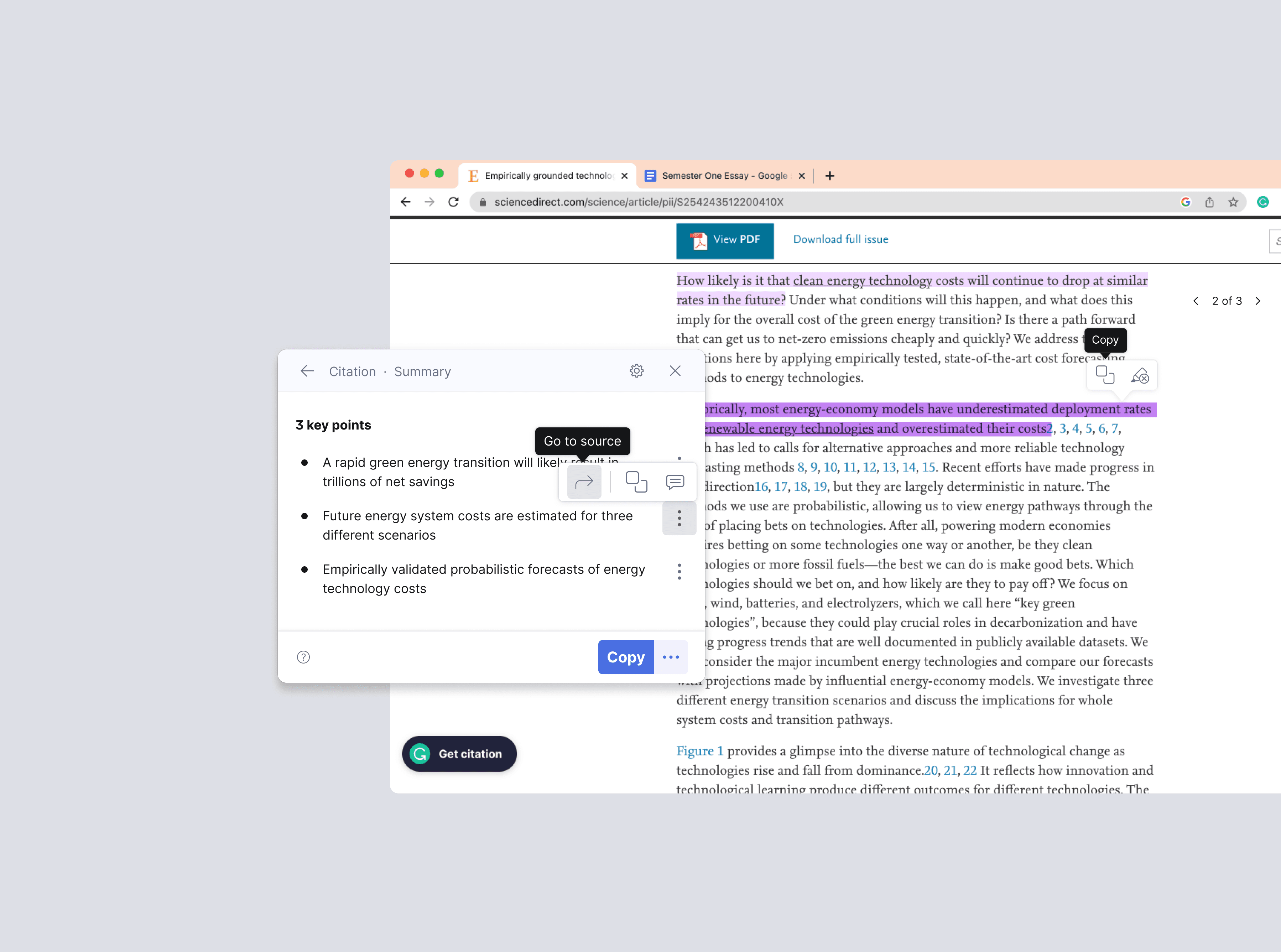
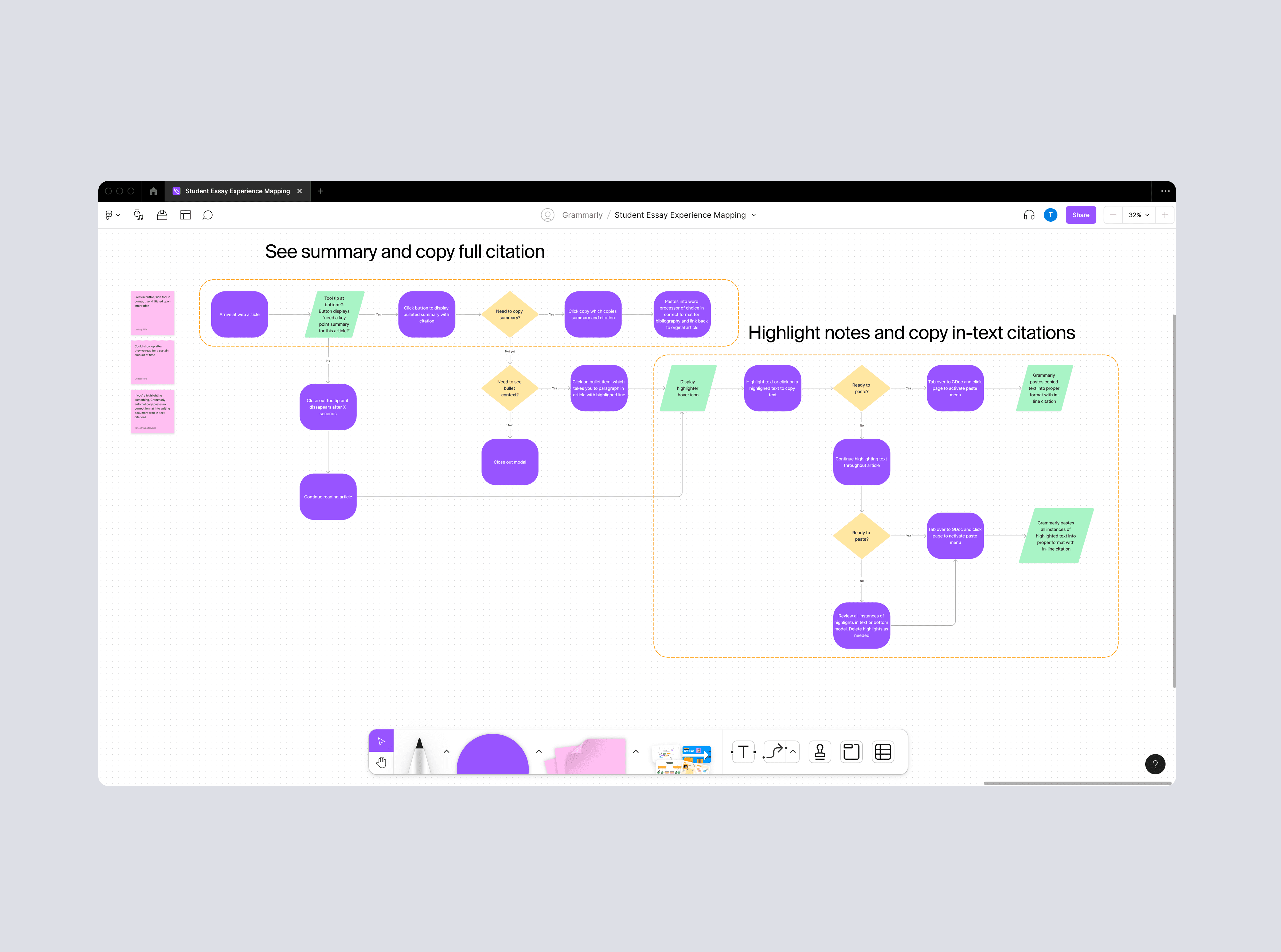
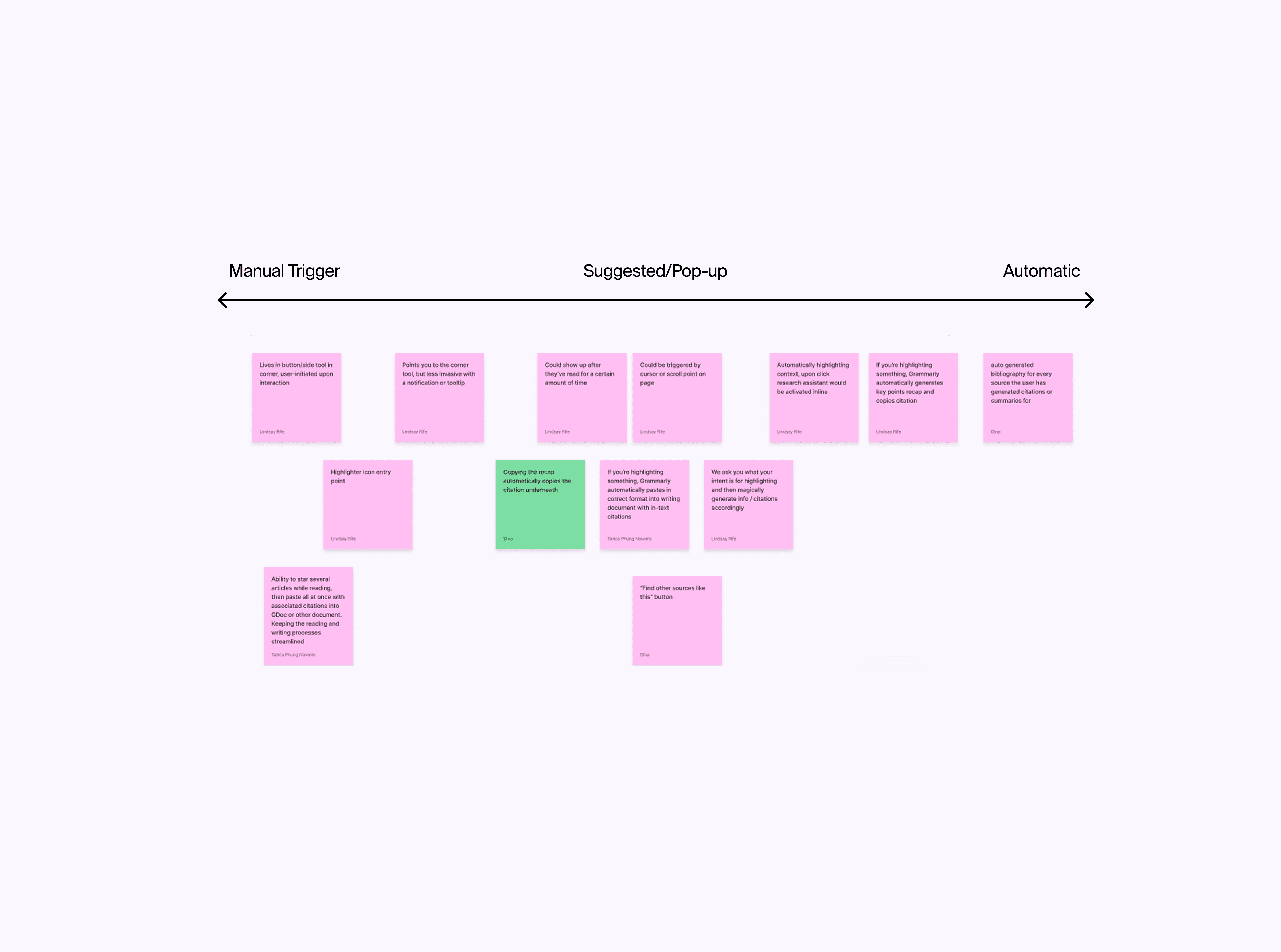
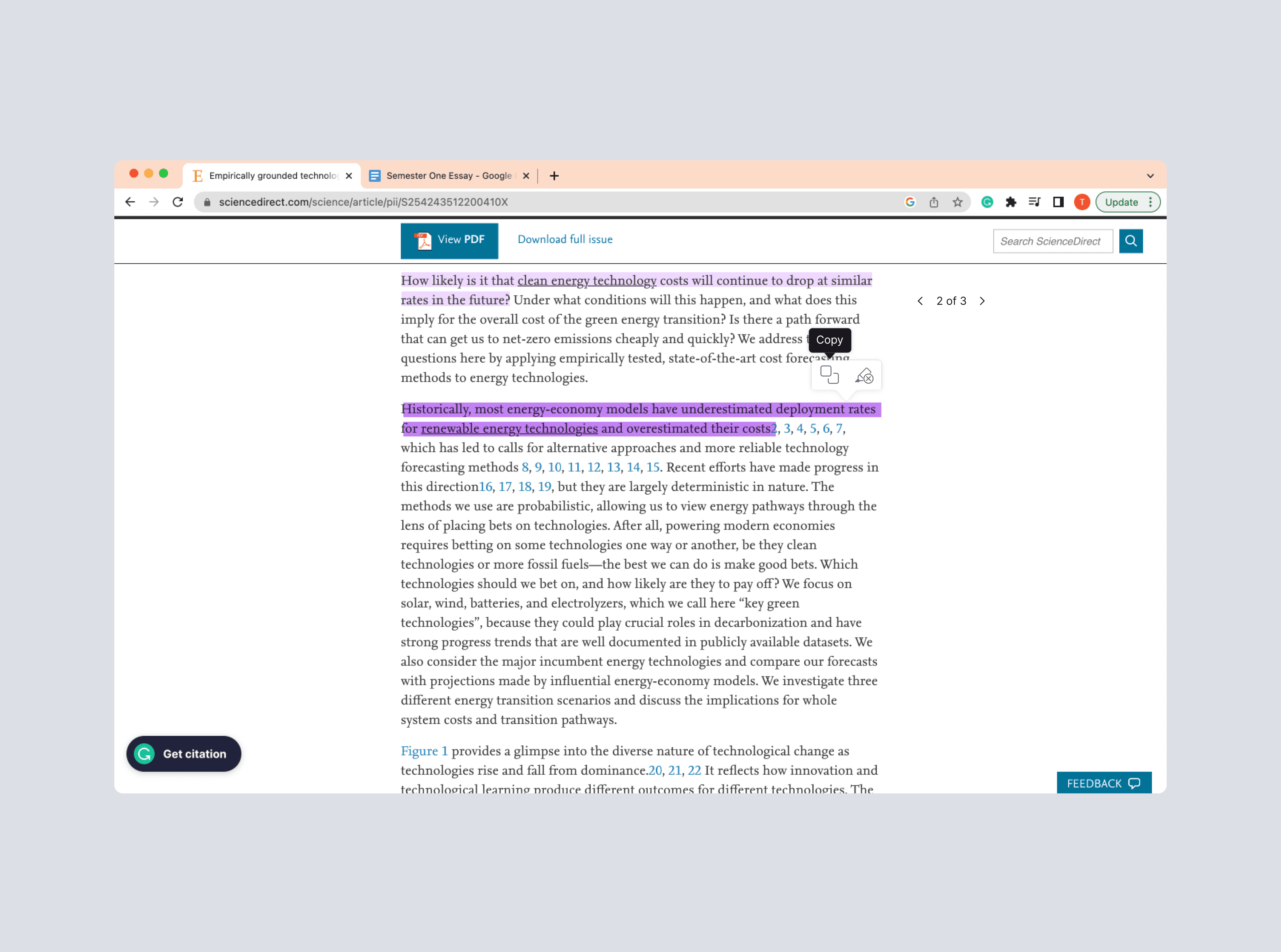
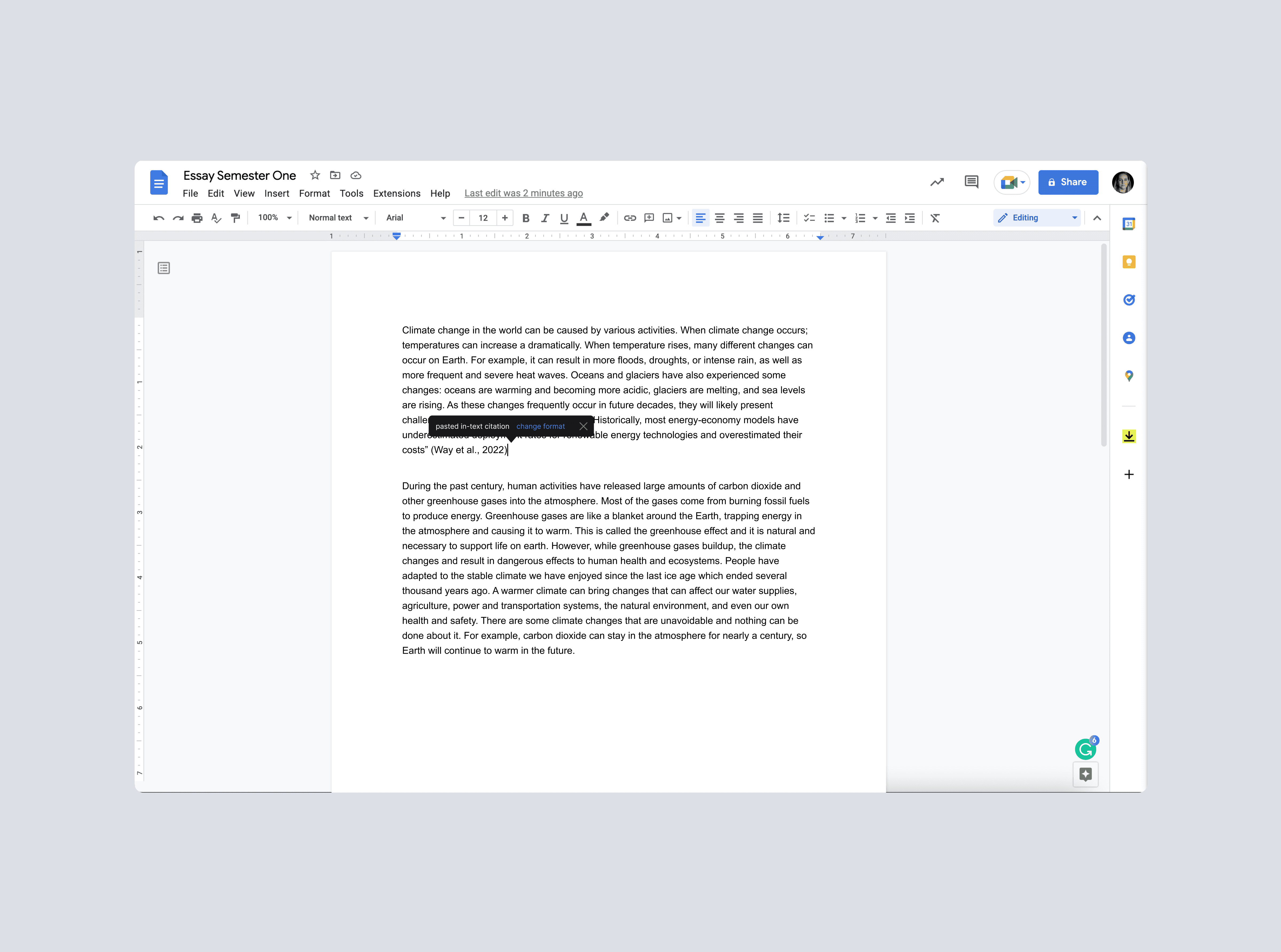
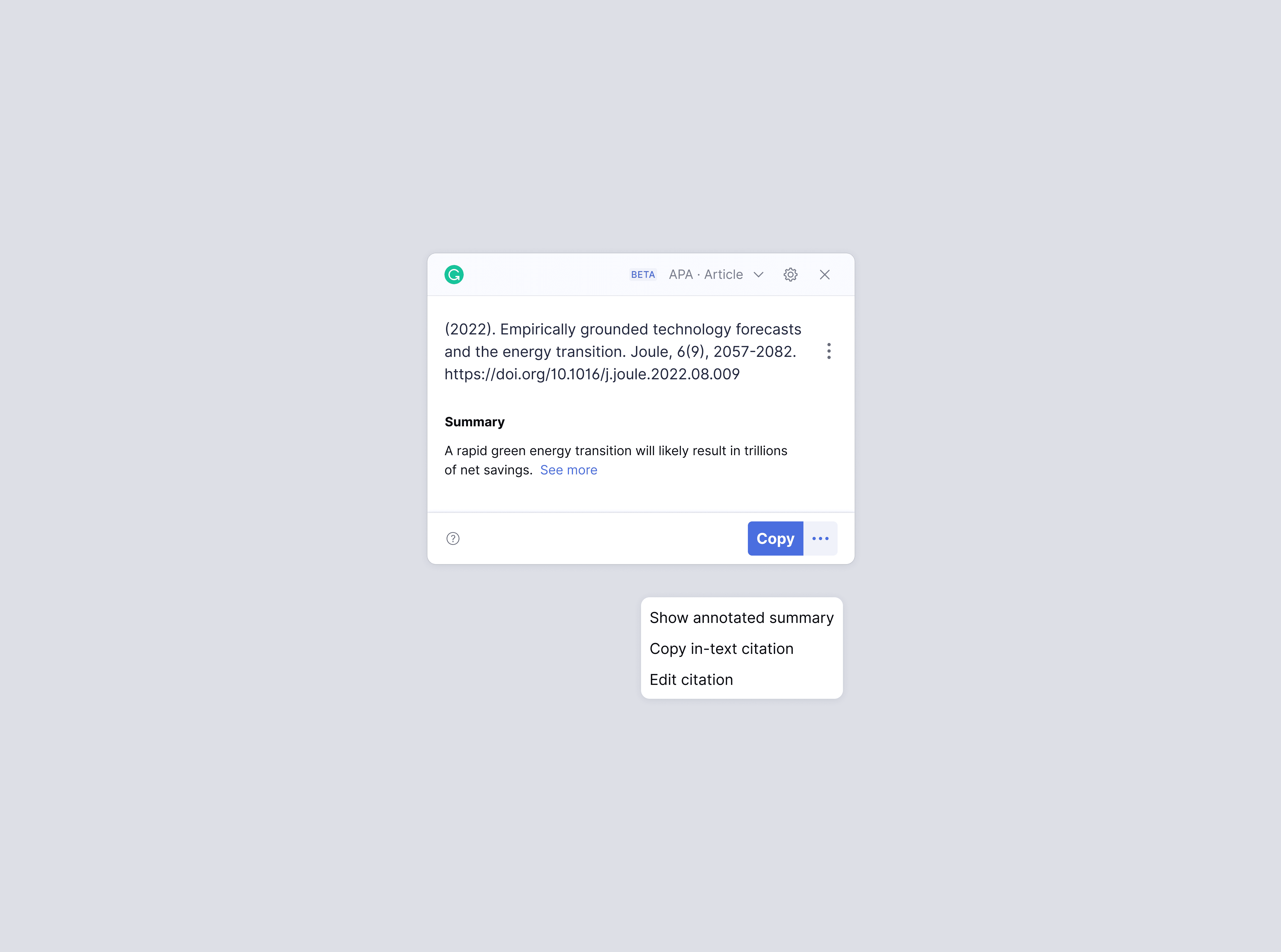
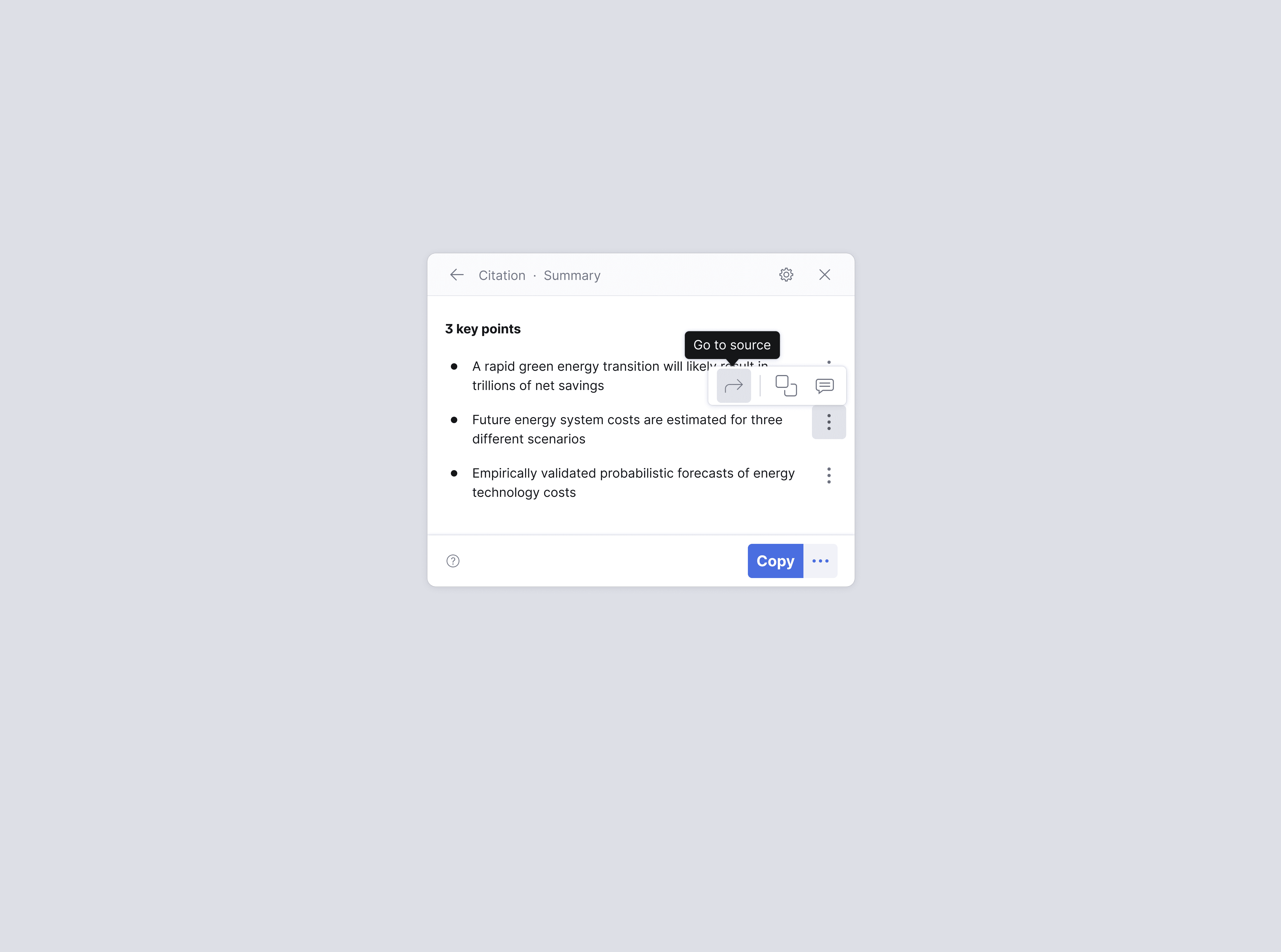
I approached the problem by first mapping the full lifecycle of long-form writing, identifying how research shows up at different stages rather than treating it as a single task. This revealed that the type of support students need shifts depending on the stage of a project, from quickly understanding a source, to capturing key insights, to retrieving and applying those insights during writing. From there, I structured the experience around these moments. Early in the process, the focus was on summarization, helping students quickly grasp the core ideas of an article. As they moved into deeper research, the experience supported highlighting and note-taking, allowing key points to be captured and stored. During composition, those notes became accessible in context, making it easy to reference material, insert citations, and continue writing without breaking flow. Finally, the system supported formatting and organizing sources into complete citations and annotated bibliographies. A key part of the work was defining how these capabilities would live within Grammarly’s existing ecosystem. Rather than creating a separate tool, I explored multiple entry points — starting from reading, writing, or citation management, and designed flows that allowed users to move between them seamlessly.
Outcome
The final concept outlined a cohesive research system that extended Grammarly’s existing capabilities into long-form academic workflows. It enabled students to digest complex information more efficiently, capture and organize key insights, and apply them directly within their writing process. By embedding research support into familiar tools like the Citation Generator, the experience reduced context switching and created a more continuous workflow from reading to writing. The work also established a foundation for expanding beyond students, demonstrating how Grammarly’s technology could support broader research and knowledge work use cases.