Industry

Consumer Goods / DTC / Startup

Client

KINN

KINN Home Brand Identity and Website Design
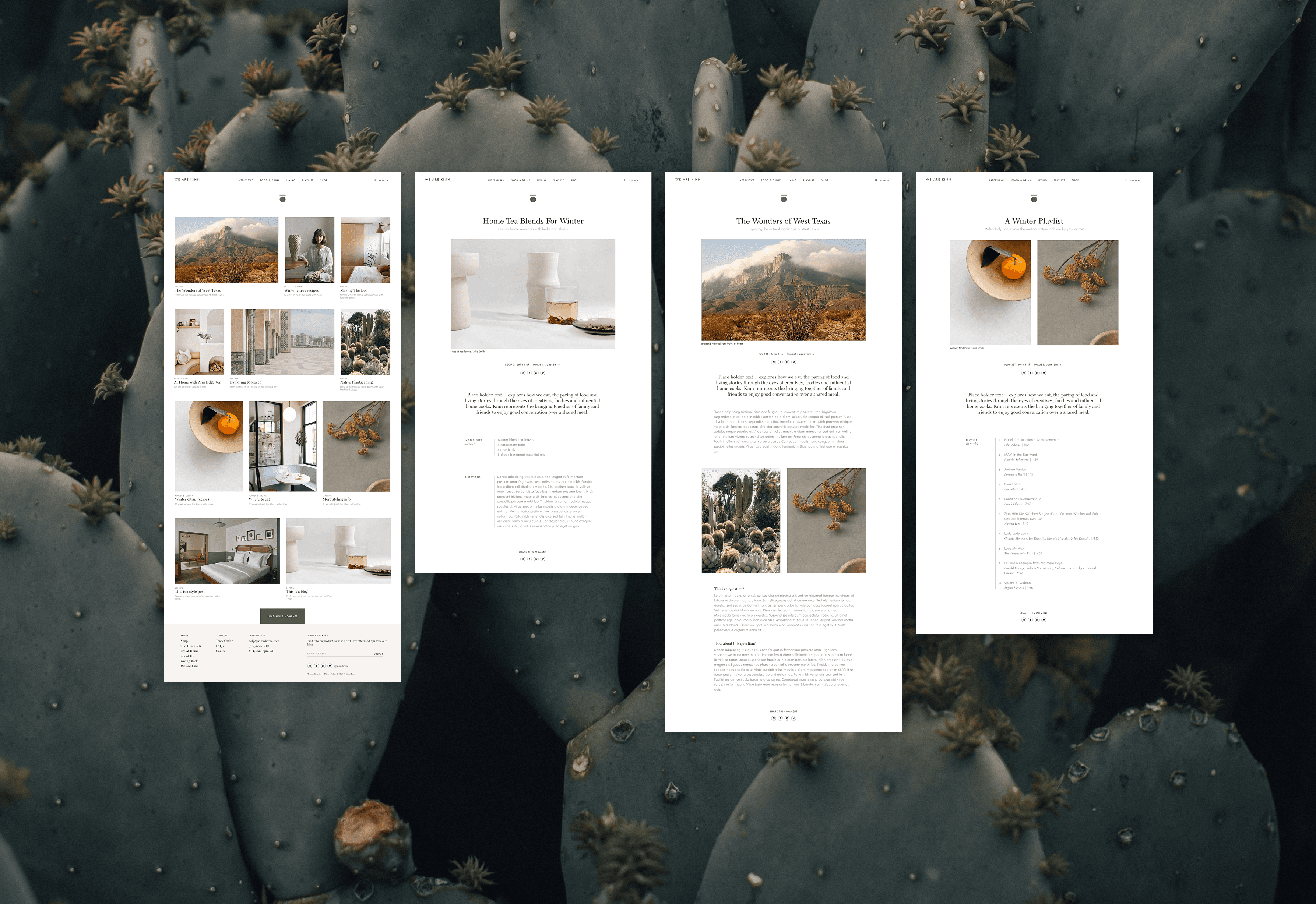
Main Project Image
Main Project Image
Main Project Image

Overview

KINN is reimagining the way people shop for home essentials. With a mission centered on elevating daily living through good design, KINN set out to challenge a familiar problem in the home goods space: finding well-designed, quality products is often overwhelming, time-consuming, and prohibitively expensive. The abundance of choice, rather than empowering customers, frequently leads to decision fatigue and purchase abandonment. This project focused on defining a brand strategy and identity that reduced friction, built trust, and helped customers feel confident in their choices—without sacrificing taste, values, or flexibility.

KINN is reimagining the way people shop for home essentials. With a mission centered on elevating daily living through good design, KINN set out to challenge a familiar problem in the home goods space: finding well-designed, quality products is often overwhelming, time-consuming, and prohibitively expensive. The abundance of choice, rather than empowering customers, frequently leads to decision fatigue and purchase abandonment. This project focused on defining a brand strategy and identity that reduced friction, built trust, and helped customers feel confident in their choices—without sacrificing taste, values, or flexibility.

The Challenge

Early hypotheses suggested that customers felt overwhelmed by excessive options and unclear guidance, which led to hesitation at key decision points. Beyond conversion loss, this uncertainty also contributed to higher return rates, particularly in categories where qualities like texture, weight, and tactility are difficult to assess online. The challenge was not simply to curate fewer products, but to design an experience and brand system that made customers feel assured, informed, and personally connected to what they were buying.

Early hypotheses suggested that customers felt overwhelmed by excessive options and unclear guidance, which led to hesitation at key decision points. Beyond conversion loss, this uncertainty also contributed to higher return rates, particularly in categories where qualities like texture, weight, and tactility are difficult to assess online. The challenge was not simply to curate fewer products, but to design an experience and brand system that made customers feel assured, informed, and personally connected to what they were buying.

Instead of asking, “How can we help customers put together a curated set?” we asked, “How might we help customers feel confident about their choices?”

Research & Insights

We combined qualitative field observations with quantitative sales and conversion data to understand both how customers shopped and where they dropped off. This hybrid approach allowed us to connect emotional drivers—such as uncertainty and lack of confidence—with measurable behaviors like abandoned carts and incomplete sets. Through early user research with KINN’s core audience—design-savvy, conscious consumers—we uncovered a critical insight: customers didn’t just want a pre-curated set; they wanted to feel confident that the choices they made were the right ones for them. This insight led to a pivotal reframing of the problem. Instead of asking, “How can we help customers put together a curated set?” we asked, “How might we help customers feel confident about their choices?” That shift became foundational to both the brand strategy and the product experience.

We combined qualitative field observations with quantitative sales and conversion data to understand both how customers shopped and where they dropped off. This hybrid approach allowed us to connect emotional drivers—such as uncertainty and lack of confidence—with measurable behaviors like abandoned carts and incomplete sets. Through early user research with KINN’s core audience—design-savvy, conscious consumers—we uncovered a critical insight: customers didn’t just want a pre-curated set; they wanted to feel confident that the choices they made were the right ones for them. This insight led to a pivotal reframing of the problem. Instead of asking, “How can we help customers put together a curated set?” we asked, “How might we help customers feel confident about their choices?” That shift became foundational to both the brand strategy and the product experience.

Strategy: Designing for Confidence

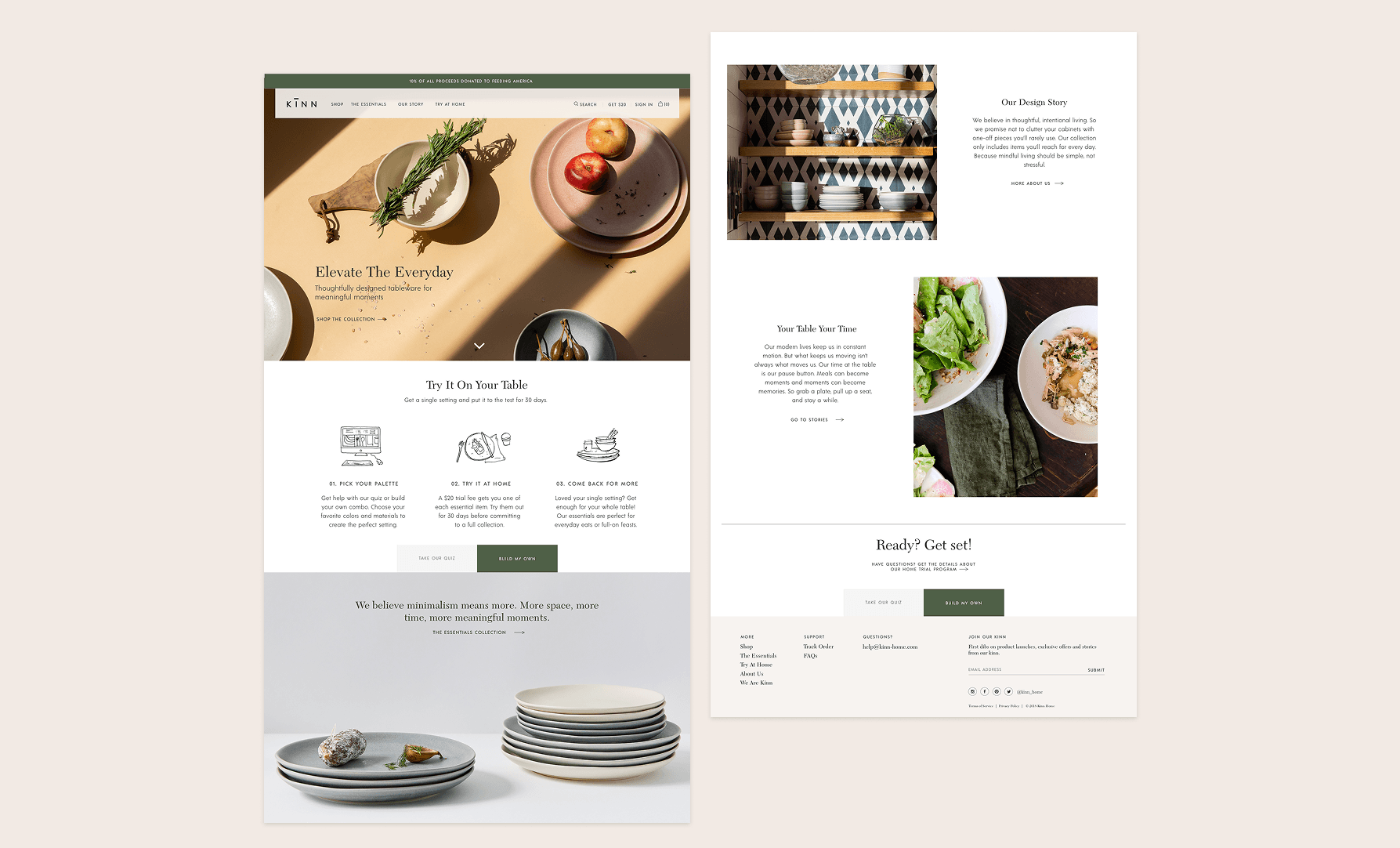
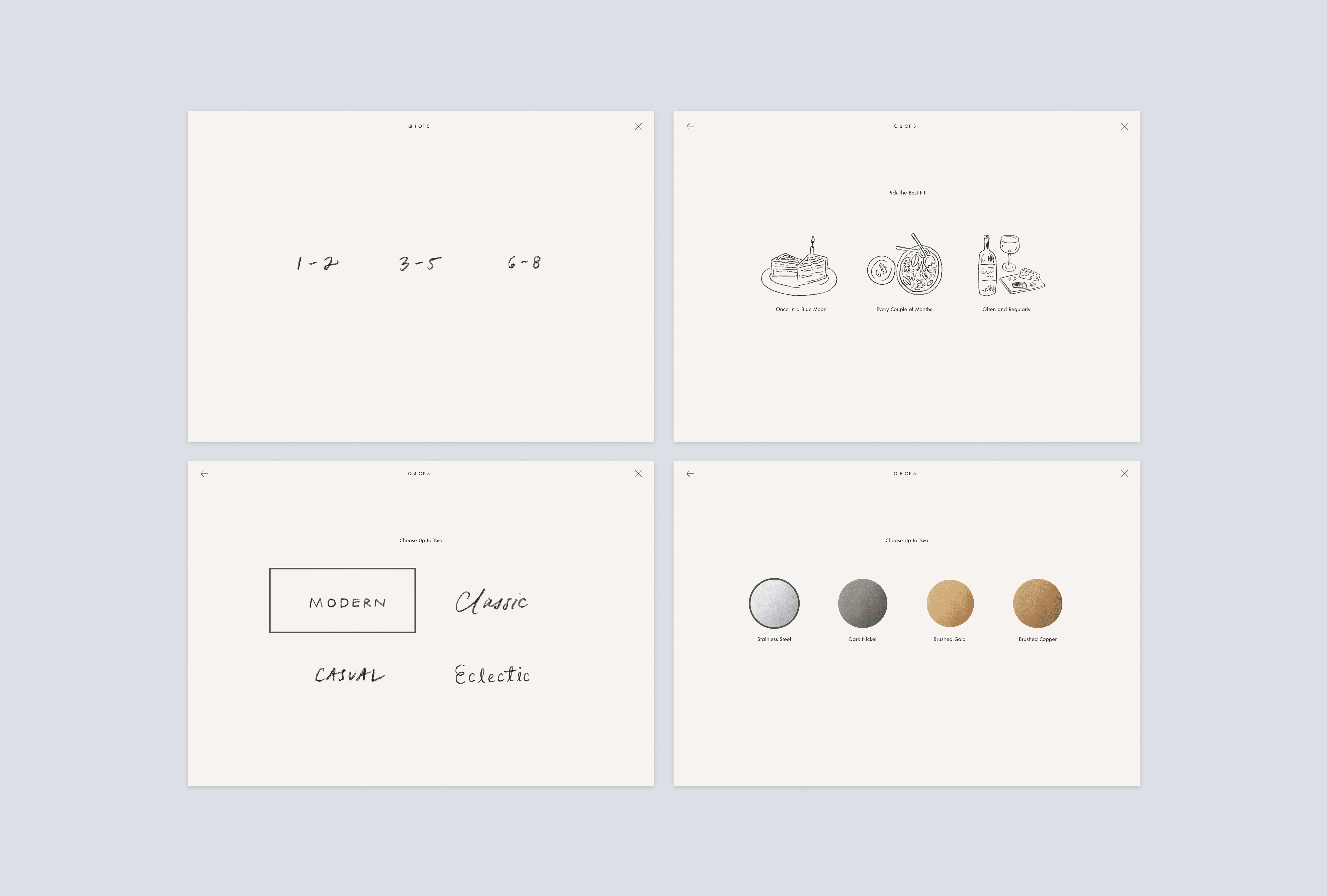
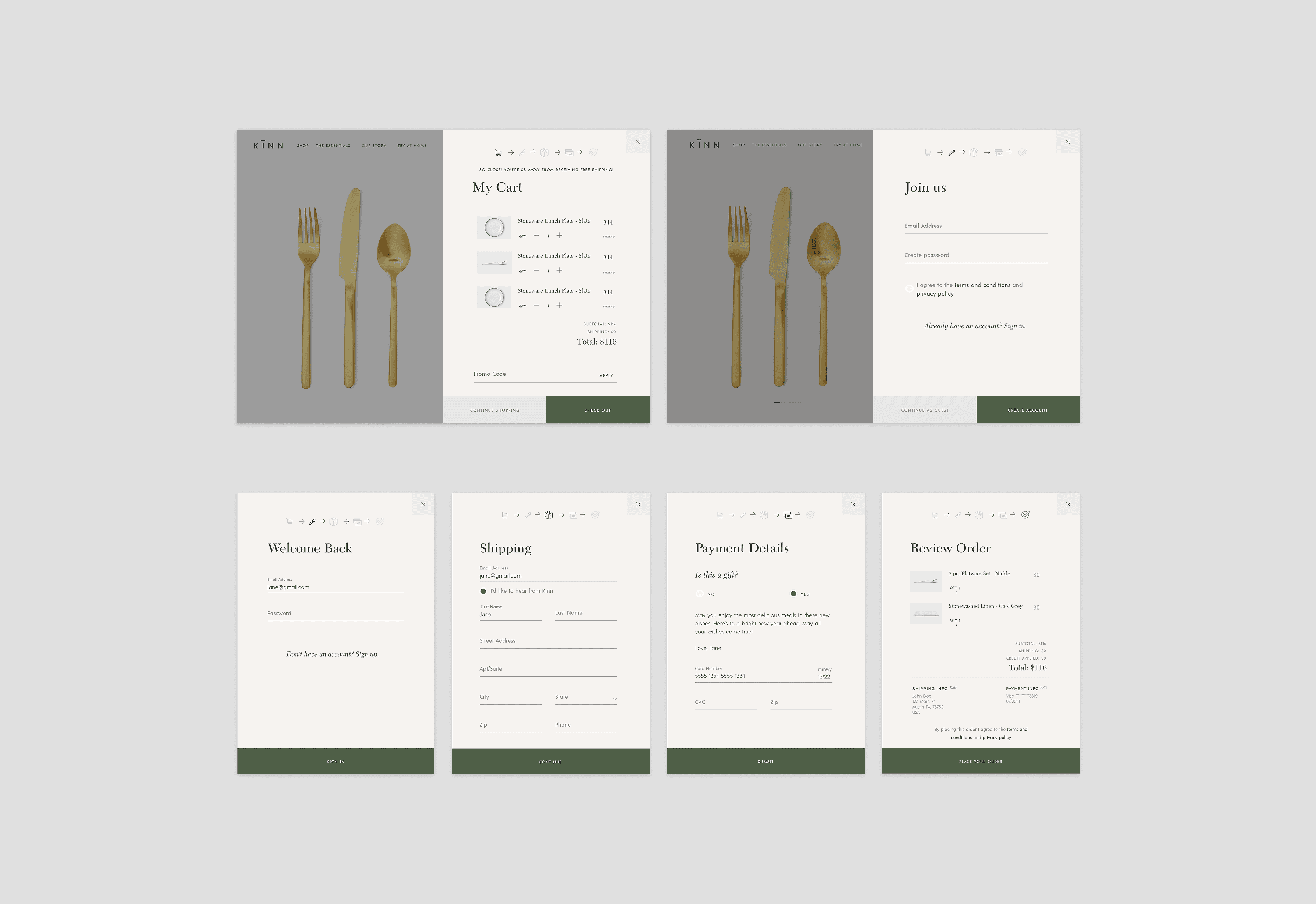
Rather than prescribing a rigid customer journey, we intentionally created a system that allowed customers to build their own personalized experience. The goal was to balance guidance with autonomy—providing enough structure to reduce overwhelm, while preserving a sense of ownership and self-expression. The experience was designed to feel considered and personal, supported by a clear visual language and a strong point of view on curation. Trust was built not through abundance, but through credibility—showing customers that every option had been thoughtfully selected and aligned with shared values. Key to reducing purchasing barriers was minimizing perceived risk. An online quiz helped translate lifestyle needs and preferences into personalized recommendations, while an “at-home” product trial allowed customers to experience pieces in their own space. This acknowledged a fundamental limitation of digital commerce: qualities like texture, weight, and feel cannot be fully communicated on a screen. Customers could further customize their selections through an interactive digital curation tool, enabling more opinionated buyers to edit and refine their sets. From there, they could proceed directly to checkout or request a home trial kit to see and feel the products in person. This seamless blending of digital and physical touchpoints—from on-site interactions to unboxing—reinforced trust and consistency. Each moment was treated as an opportunity to learn, allowing KINN to gather meaningful insights into user behavior, preferences, and decision-making patterns over time.

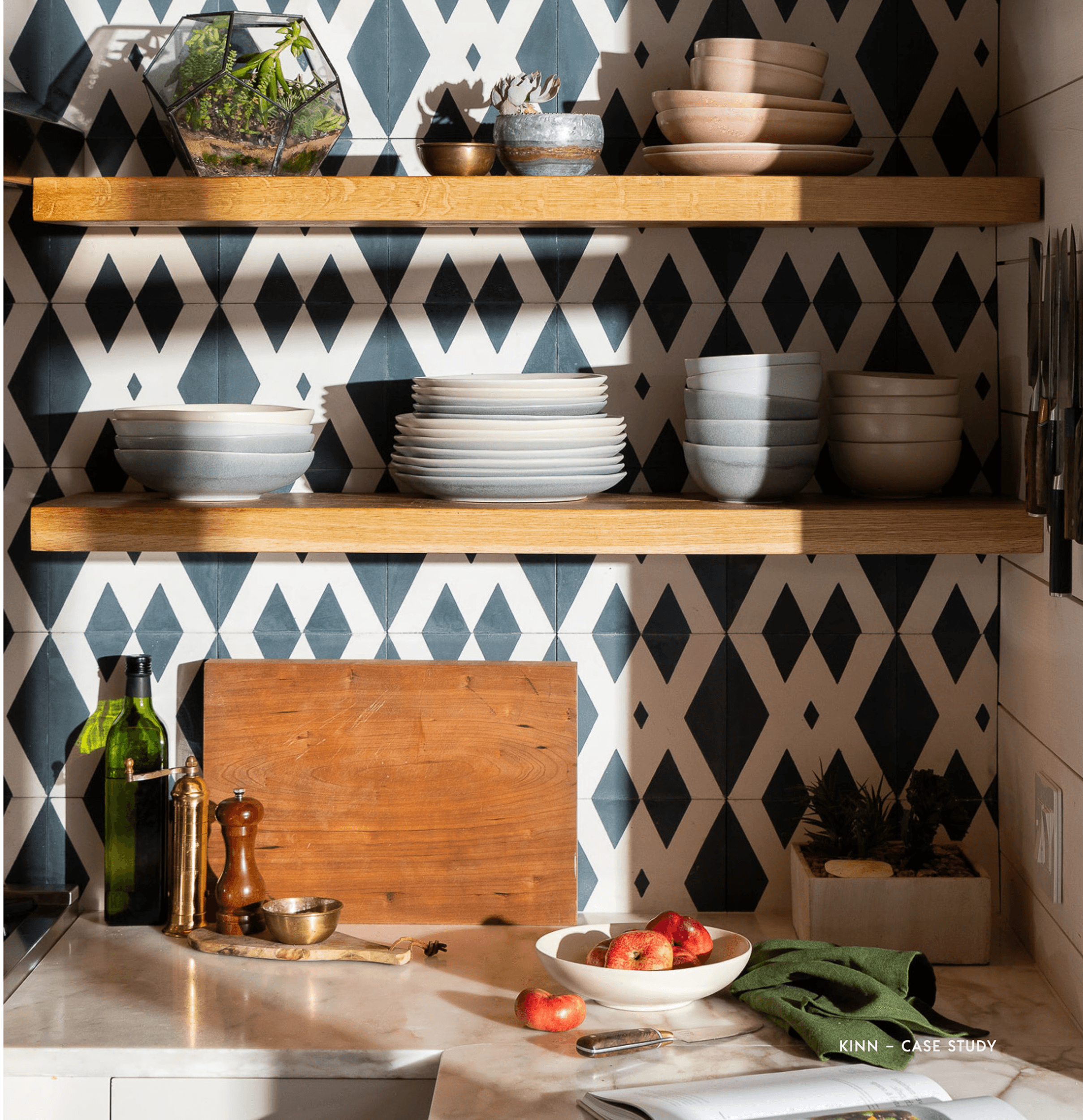
Rather than prescribing a rigid customer journey, we intentionally created a system that allowed customers to build their own personalized experience. The goal was to balance guidance with autonomy—providing enough structure to reduce overwhelm, while preserving a sense of ownership and self-expression. The experience was designed to feel considered and personal, supported by a clear visual language and a strong point of view on curation. Trust was built not through abundance, but through credibility—showing customers that every option had been thoughtfully selected and aligned with shared values. Key to reducing purchasing barriers was minimizing perceived risk. An online quiz helped translate lifestyle needs and preferences into personalized recommendations, while an “at-home” product trial allowed customers to experience pieces in their own space. This acknowledged a fundamental limitation of digital commerce: qualities like texture, weight, and feel cannot be fully communicated on a screen. Customers could further customize their selections through an interactive digital curation tool, enabling more opinionated buyers to edit and refine their sets. From there, they could proceed directly to checkout or request a home trial kit to see and feel the products in person. This seamless blending of digital and physical touchpoints—from on-site interactions to unboxing—reinforced trust and consistency. Each moment was treated as an opportunity to learn, allowing KINN to gather meaningful insights into user behavior, preferences, and decision-making patterns over time.
Brand Positioning

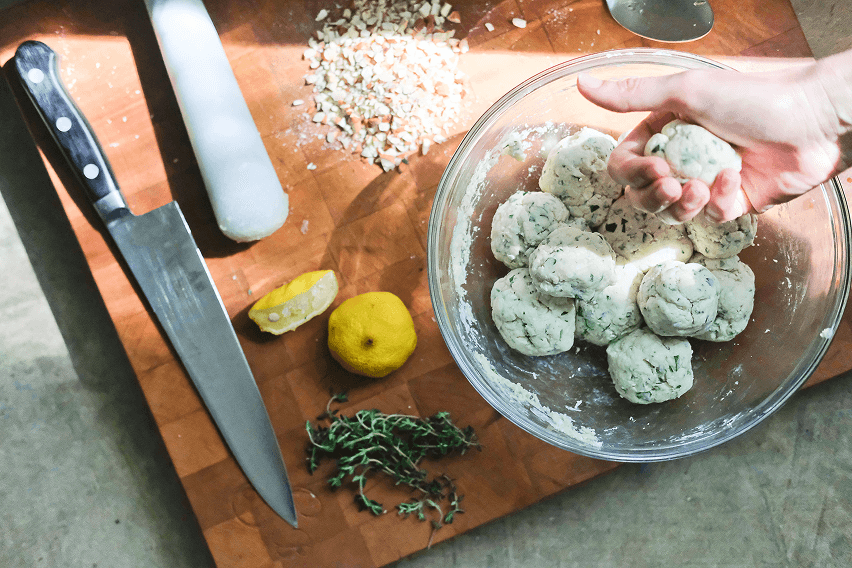
KINN speaks to the modern consumer who wants design-forward home goods that feel accessible and attainable. The brand rejects the notion that good design must be aspirational or out of reach. Instead, it positions itself as a thoughtful, everyday companion—elevated but never intimidating. The brand identity strikes a deliberate balance between unfussy and refined, reflecting a philosophy of “fewer, better.” This approach resonates with urban, modern aesthetes who value quality, versatility, and intention, often shaped by diverse cultural perspectives.

KINN speaks to the modern consumer who wants design-forward home goods that feel accessible and attainable. The brand rejects the notion that good design must be aspirational or out of reach. Instead, it positions itself as a thoughtful, everyday companion—elevated but never intimidating. The brand identity strikes a deliberate balance between unfussy and refined, reflecting a philosophy of “fewer, better.” This approach resonates with urban, modern aesthetes who value quality, versatility, and intention, often shaped by diverse cultural perspectives.

Outcomes & Impact

Over time, this confidence-led approach helped improve conversion rates and increase average order value, while also informing future product and marketing decisions through richer behavioral data. By reducing uncertainty and honoring the realities of how people shop for home goods, KINN created an experience that felt both human and intentional—one that aligned brand, product, and customer needs around a shared sense of trust.

Over time, this confidence-led approach helped improve conversion rates and increase average order value, while also informing future product and marketing decisions through richer behavioral data. By reducing uncertainty and honoring the realities of how people shop for home goods, KINN created an experience that felt both human and intentional—one that aligned brand, product, and customer needs around a shared sense of trust.

  • The image featured in the carousel #1
  • The image featured in the carousel #2
  • The image featured in the carousel #3
  • The image featured in the carousel #4
  • The image featured in the carousel #1
  • The image featured in the carousel #2
  • The image featured in the carousel #3
  • The image featured in the carousel #4
  • The image featured in the carousel #1
  • The image featured in the carousel #2
  • The image featured in the carousel #3
  • The image featured in the carousel #4